

At the end of May, the very first European Indigenous Tourism Conference (EITC) was organized in Anár (Inari) at the Sámi Cultural Centre Sajos. The conference included a research symposium, presentations, and various panel discussions, all related to different questions and dimensions of Indigenous tourism both in Sápmi and around the world. The conference also organized wonderful side workshops, such as Sámi jewelry and belt workshops.
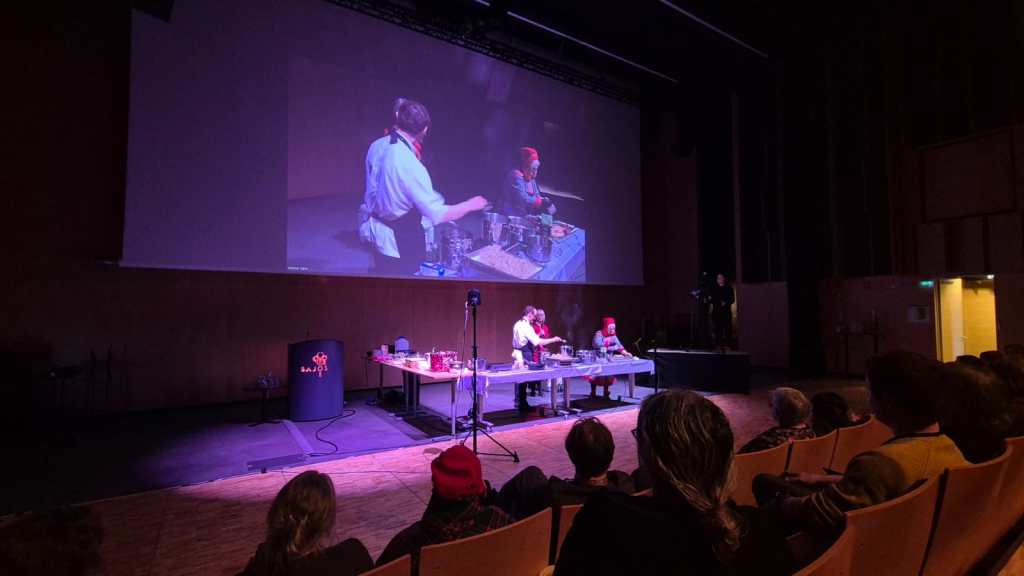
MÁHTUT Project also took part in the program with two events: The Sámi Food Show and a food workshop. The Sámi Food Show focused on local and traditional ingredients and was moderated by host Saara-Maria Salonen. Local chef Heikki Nikula from Anár and traditional knowledge holder Maarit Länsman from Ohcejohka cooked different dishes at the food show, and tastings of the dishes were shared with the audience after the cooking. Heikki cooked cold-smoked reindeer calf sirloin with pine needles, lichen seasoned with dried reindeer meat powder, and angelica sour cream, and Maarit cooked reindeer blood dumplings, blood sausages, and bone marrow.
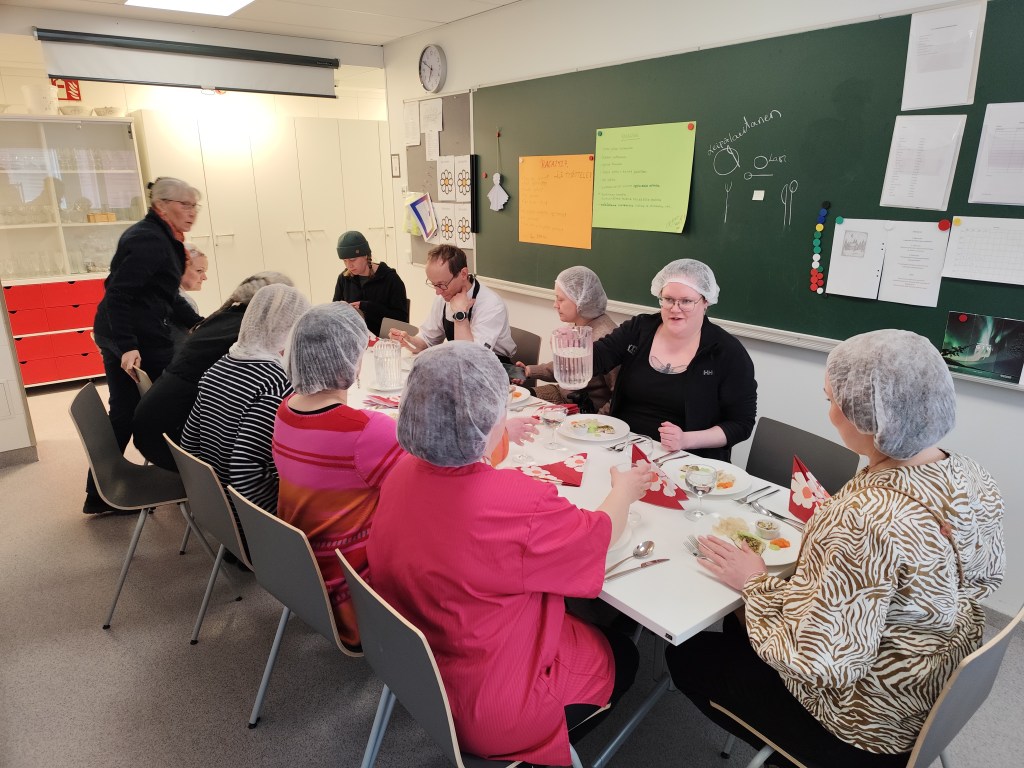
Later in the week, eight local participants gathered at the Sámi Education Centre to cook with local ingredients and try out recipes curated by Heikki Nikula. The atmosphere was joyful, as the workshop started with participants sharing their favorite ingredient to use in cooking while getting to know each other. Many chose Inari Lake whitefish as their absolute favorite. Other ingredients mentioned included different parts of reindeer and wild herbs.
After introductions, the participants chose a recipe from the menu created by Heikki. As cooking began, the participants were excited and started preparing the dishes with steady hands. During the preparations, many shared their unique visions using local ingredients. One of the participants described the use of rowan buds and how the wild herb can be used in multiple ways to highlight its flavor — as forms of cream, butter, oil, alcoholic beverages, vinegar, and pickling.

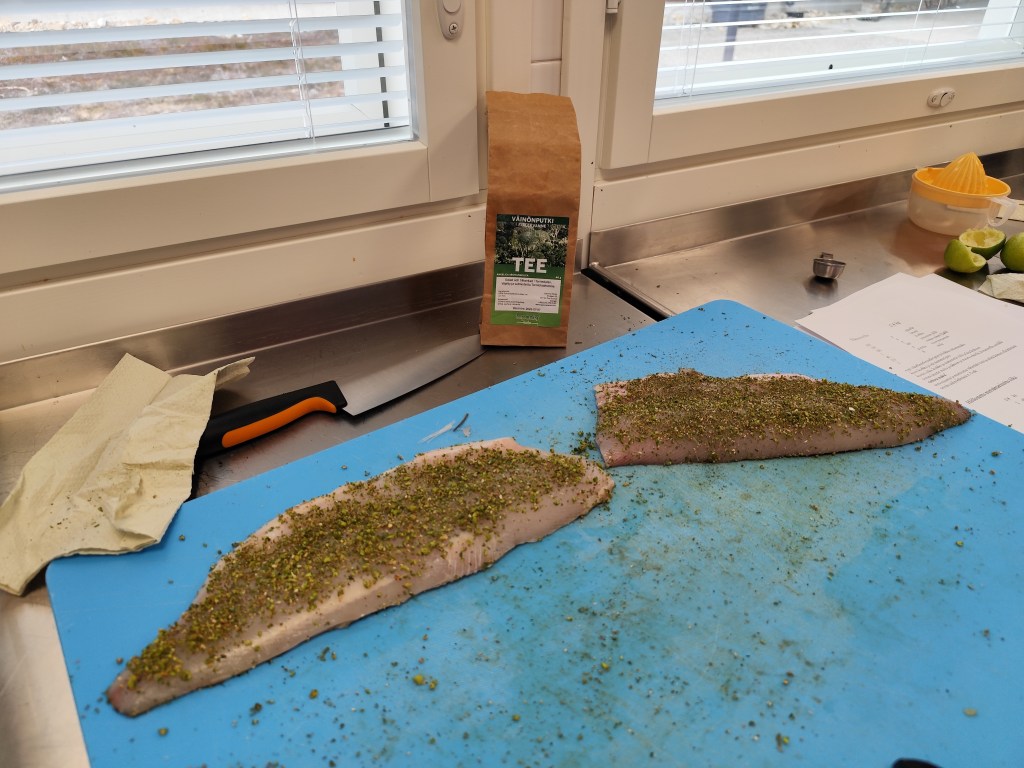
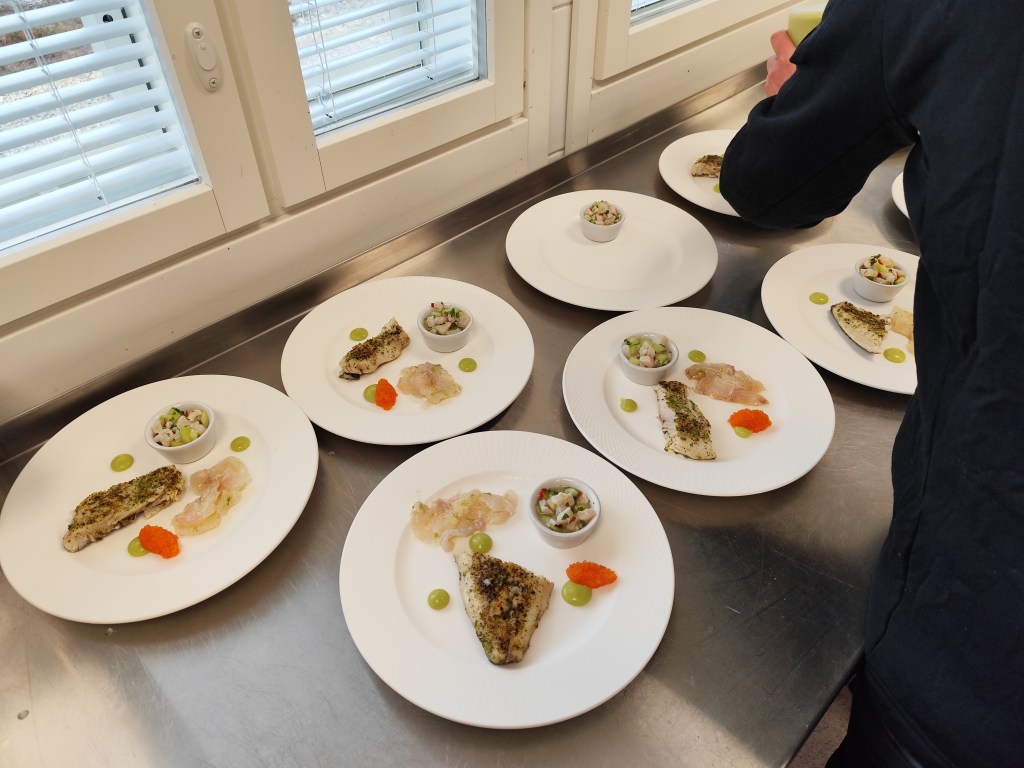

After the cooking, dinner was ready, and everyone sat down to enjoy the different courses prepared by the workshop attendees. The first dish centered around variations of whitefish and included charred whitefish with juniper berry and angelica, whitefish ceviche, and lemon-cured whitefish with whitefish roe. The second dish was reindeer tongue, blue cheese beignet, and mushroom broth clarified with calf liver. While enjoying the delicious meal, the participants were filled with pride. “I can’t believe we cooked this ourselves!” one attendee celebrated.
After dinner, the discussion focused on local ingredients, their accessibility, traditional ways related to subsistence activities, and the future prospects of Northern and Sámi food culture. One participant mentioned how reindeer tongues have become more expensive, and because of EU directives and new slaughtering regulations, reindeer fat goes to waste more often than it used to. Collecting reindeer blood under new directives has become more expensive and burdensome. Another participant said that reindeer livers now have a new parasite due to warm weather, which has led to a sixty percent increase in livers going to waste.
Inari Lake trout and Arctic char have also become more worm-infested, and there are no more big trout because of parasites. Someone shared a memory of how trout in their family freezer used to be larger, but bigger trout are becoming rarer nowadays.
Hunting activity discussions centered around willow ptarmigan and forest game birds. One participant explained that there are now more western capercaillie and how the number of ptarmigans has drastically declined. Another participant wondered if climate change has affected the decline in bird numbers because ptarmigans’ summer colors stand out more clearly in snow, making them easier to hunt and for predators to find.
One participant explained the collective social wisdom and unspoken rules related to ptarmigan hunting. In some areas in Anár, ptarmigans are no longer hunted in autumn, as the population has decreased so much. The same rules apply in some moose hunting groups.
Other effects of climate change were also discussed. Heat and drought have affected the sizes of reindeer herds and the numbers of bean geese. Someone said: “Bean goose is a goddamn fantasy creature nowadays,” as sightings of the birds become rarer.
Participants also explained how southern species are spreading to northern areas. Porcini mushroom, orange birch bolete, black grouse, and hazel grouse are now more common in Sápmi than before. Mushrooms are becoming more worm-infested, and parasites are increasing. One participant told how ice fishing in Inari Lake used to take place in October after the Second World War, but nowadays it’s very rare to access the ice cover to fish in December. Another participant mentioned how the perch population of the lake has also increased.
Future visions related to subsistence activities were also discussed. Winter and ice conditions are becoming more difficult as snow covers decrease. Changes in climate have direct impacts on reindeer herding and fishing, as water temperatures rise. Humus in the water is increasing, and fish species are changing. There was also collective concern among many participants regarding their favorite ingredient, Inari Lake whitefish, due to the changes in water temperature. While weather conditions are becoming stranger and harder to predict, processes related to making Sámi handicraft duodji and collecting materials are also becoming more challenging. One participant described how reindeer hides spoil in changing spring conditions. Strange springs also affect drying reindeer meat, which is a traditional and highly valued Sámi delicacy.
All in all, the Sámi Food Show and the food workshop were wonderful, insightful, and educational experiences. Olu giitu to all participants who shared their enthusiasm for trying new recipes in the kitchen, their knowledge related to the accessibility of traditional ingredients, and the different impacts of climate change. As chef Heikki Nikula wisely said and summarized, “It’s not the fish’s fault if it tastes bad.”
Eleonora Alariesto
Project Planner
 MÁHTUT
Leave a comment