

On the 19th of June, our project team members gathered in Lycksele at the Forest and Saami Museum Gammplatsen for our highly anticipated pine bark workshop. The day began with a guided tour of the museum by its director, Eva Lundström, who shared interesting information about traditional Sámi pine bark harvesting. Gammplatsen has organized workshops for local children to teach them about pine bark, and Eva told us how the children have tasted different flavors in the pines, such as cinnamon and vanilla. But how is it possible that pine trees have such different flavors of their own?
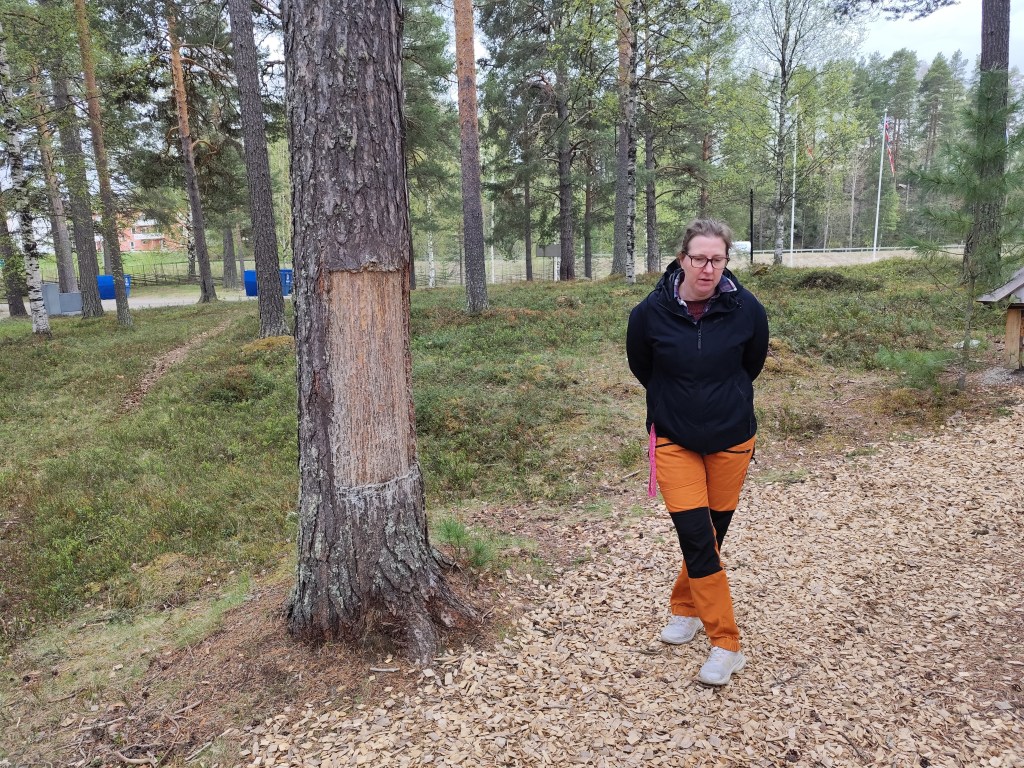
Pine bark has traditionally been a highly valued and nutritious supplement to support diets throughout the winter. It was harvested and added, for example, to reindeer meat soups. Eva also explained how settlers tried to learn the practice of harvesting pine bark but mistakenly used the outer bark of the pine to make flour and bread, rather than the highly nutritious inner bark used by the Sámi people.
Nowadays, so many trees have been cut down that old pine bark harvest trees are becoming increasingly rare to find. Even so, archaeologists continue to discover these old trees. The oldest documented pine bark tree found was dated to be as old as 30,000 years. “Not thirteen thousand years?” I asked. “Yes, thirty thousand years,” our guide told us, laughing. It was hard to comprehend that we were about to learn about a subsistence economy activity that dated back tens of thousands of years.
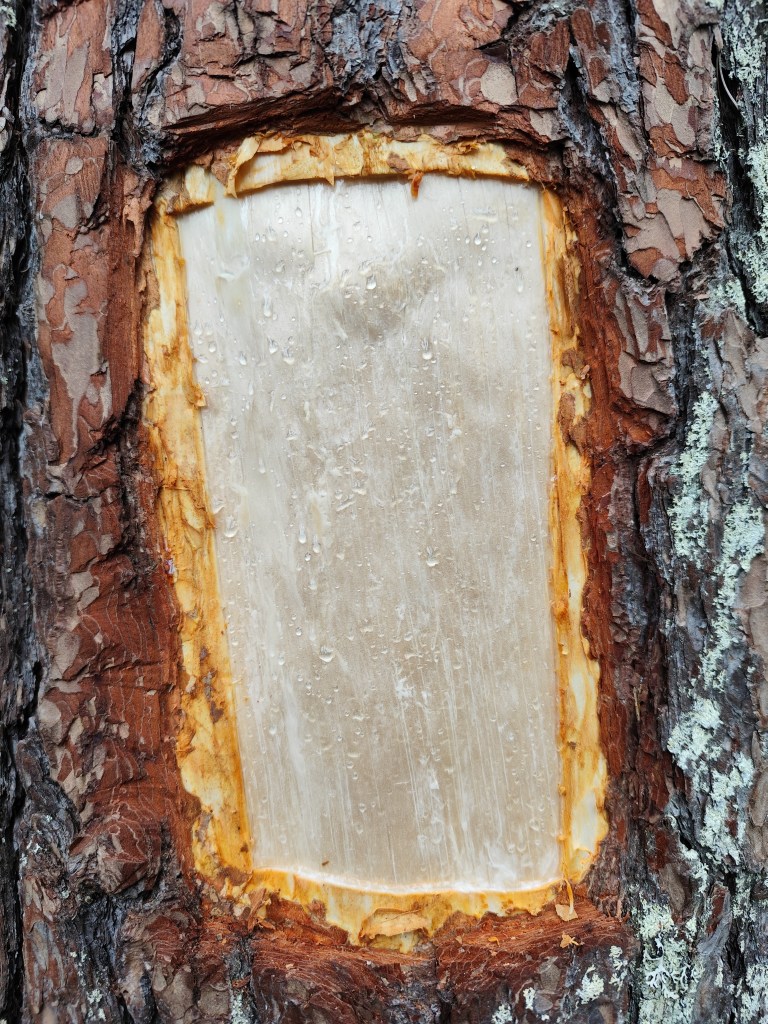
After the museum tour and lunch, we drove to a forest site where we would collect the pine bark. Local harvesting expert Mikkel Jakobsson told us about the harvesting process and demonstrated how it’s done. After Mikkel’s harvesting, two of our project members, including yours truly, had the chance to try harvesting ourselves. Mikkel described how different pines have a taste of their own. Many components affect the taste of the tree: vegetation growth on the tree, sunlight, and hydration. The two pine trees selected by Sámi Education Centre coordinator Mika Aromäki and myself tasted completely different. The tree I chose, based on the vegetation on the tree, tasted like mango, and the tree chosen by Mika tasted like xylitol.
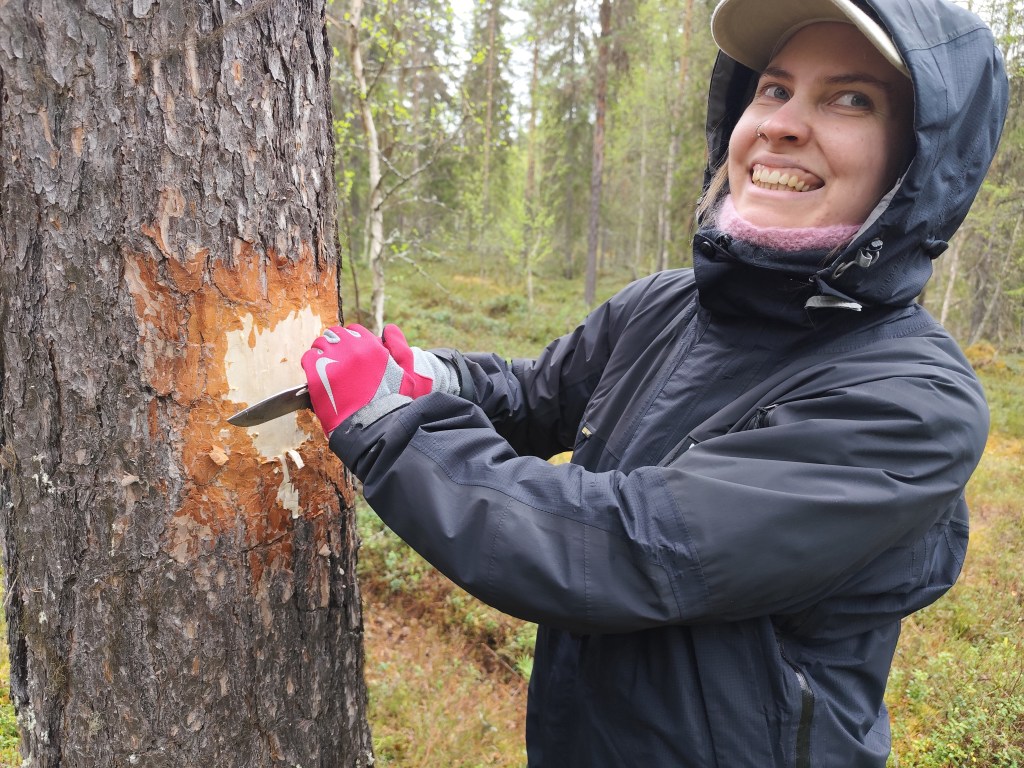
Between the years 1850 and 1900, pine bark harvesting was officially banned by the Swedish forest industry. Over time, the traditional knowledge related to the practice began to disappear, as it was no longer passed down to new generations. Legal regulations affected this break in the generational knowledge chain, but so did the fact that pine bark gained the status of “poor man’s food,” which further contributed to its decline in status and usage.
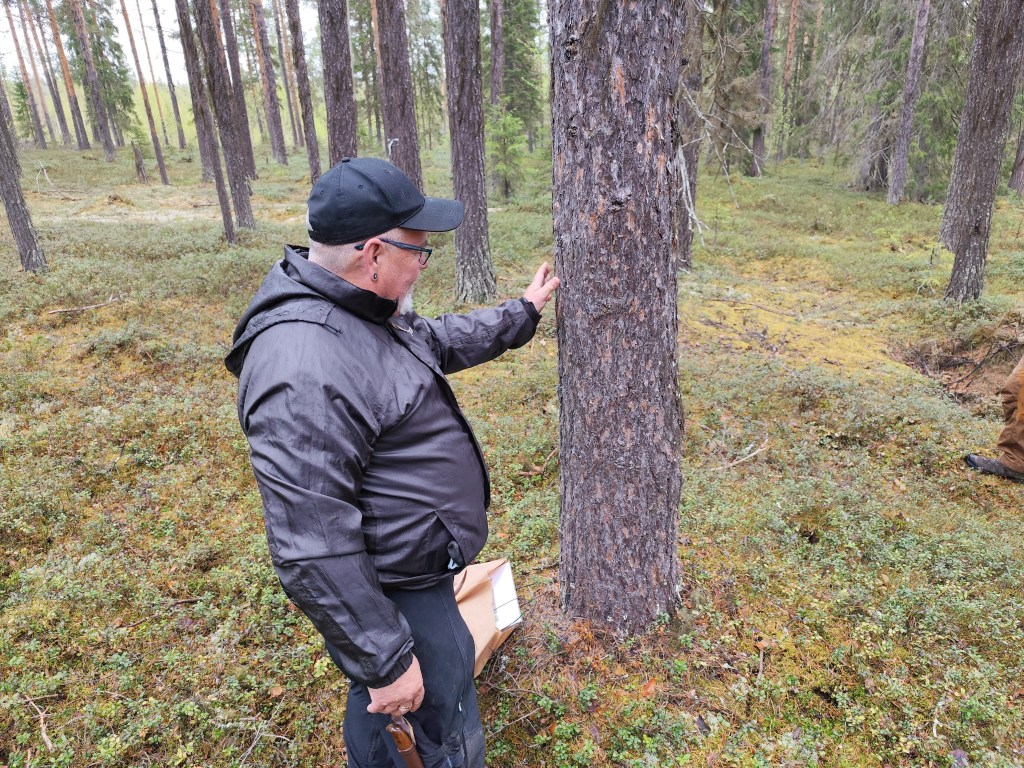
Mikkel guided us through the different stages of pine bark harvesting, which included three crucial steps. First, you choose the tree – the more growth it has, the fresher the tree is. Then you ask the tree for permission. Using a sharp knife, you carefully scrape the outer bark and then slowly remove the inner bark with a different tool. After collecting, the pine bark can be dried or smoked in a lávvu, or fried in a pan until the flakes turn golden. The dried or smoked flakes can be added to dishes such as soups.
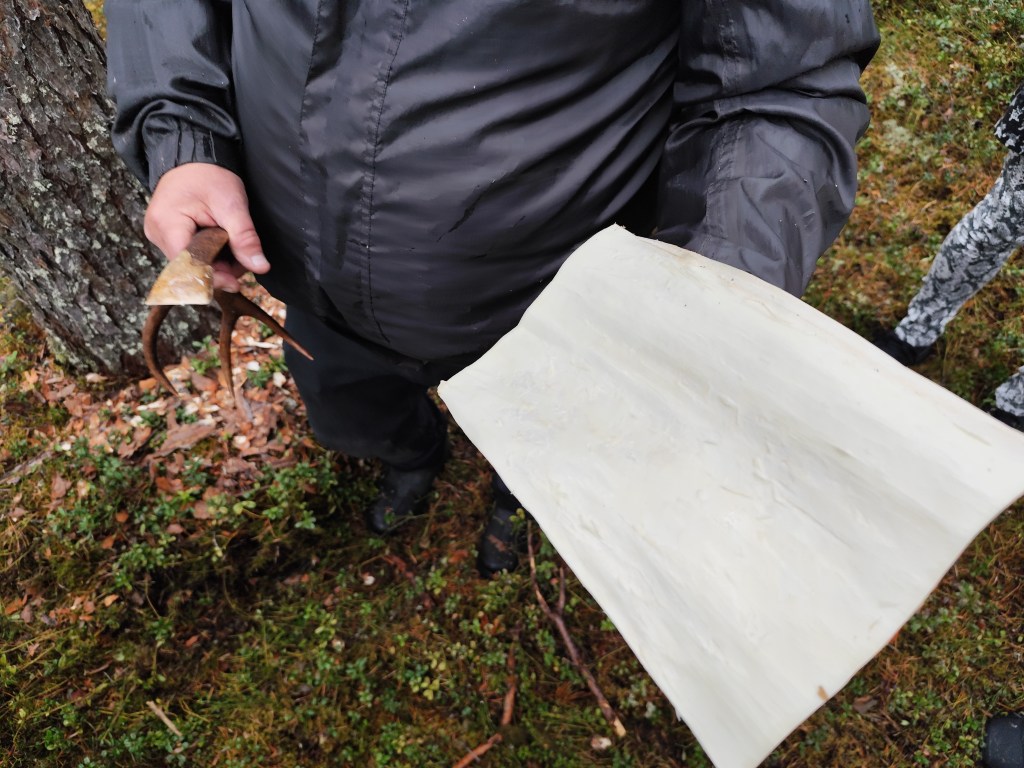
After our harvesting, we got to taste small samples of dried and smoked pine bark. I was excited to try the sample and assumed the flake would taste like dried mango or xylitol. Imagine my surprise when the flake tasted like – you guessed it – a tree.
All in all, our workshop at Gammplatsen with Eva and Mikkel was a wonderful and educational experience, and we are proud to say that we now have the incredibly valuable traditional knowledge of how to harvest pine bark — something to teach our children.
Olu giitu, Eva and Mikkel, for a wonderful workshop!
Read University of Umeå’s report on the workshop in Swedish: Hur skördar man tallbark?
Eleonora Alariesto
Project Planner
 MÁHTUT
Leave a comment