

On Friday, October 25th, the University of Lapland hosted an honorary seminar to celebrate the traditional luossafanas (Deatnu river boat), crafted by master duojár Jouni Laiti from Ohcejohka. The significant event highlighted the outcome of the DEATNU and MÁHTUT projects, culminating in the addition of the luossafanas to the University’s art collection, now displayed in the main hall. The seminar featured beautiful and thought-provoking speeches by Rector Antti Syväjärvi, Professor Jarno Valkonen from the DEATNU project, post-doctoral researcher Áile Aikio, along with an introduction to a short documentary filmed by DEATNU project’s post-doctoral researcher Mikko Äijälä. The short documentary was edited by the University’s audiovisual communications planner Ville Rinne. The speeches by Valkonen and Aikio are included in this blog post and can be read below.
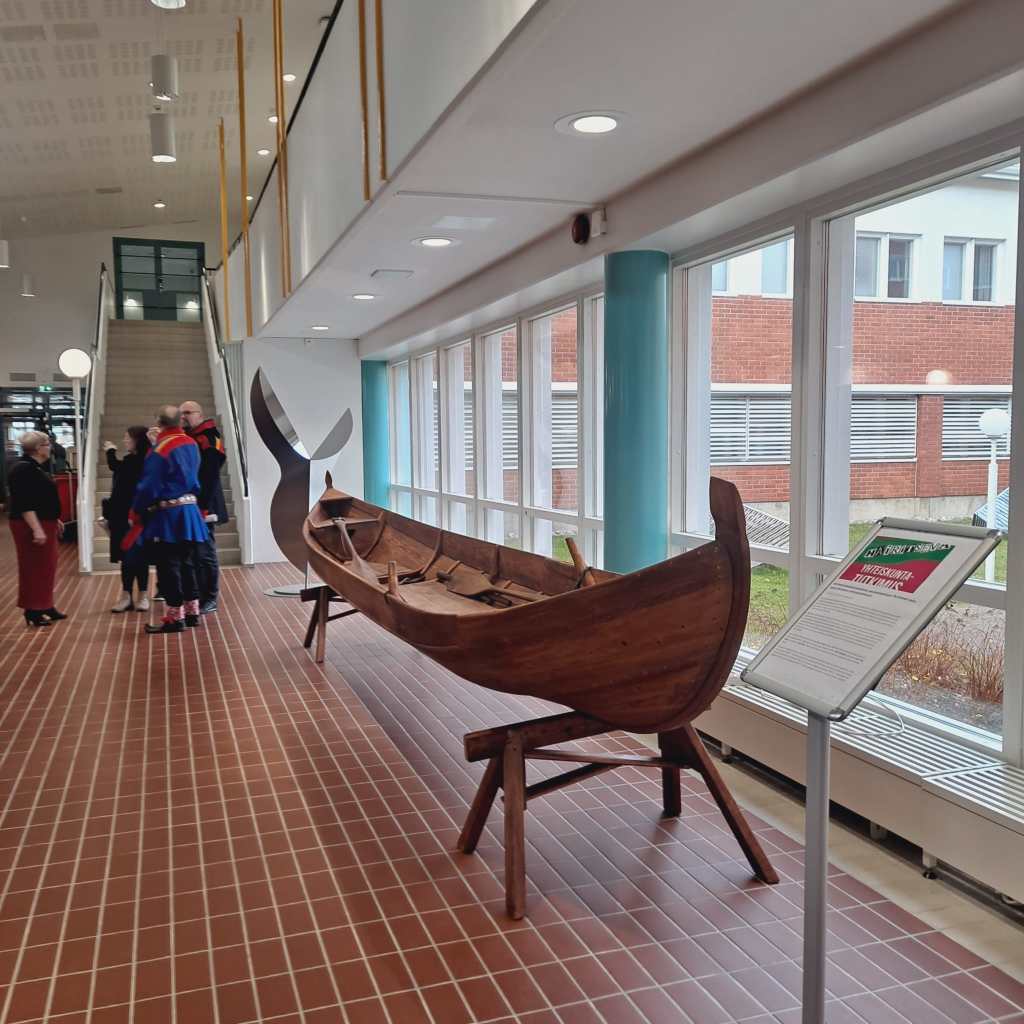
Salmon fishing has been integral to sustaining the Deatnu Sámi community for centuries. This practice encompasses the Sámi’s economic, cultural, political, and community-driven knowledge and skills. As Professor Valkonen emphasized, the luossafanas embodies these dimensions, having been used both as a vessel for transport and fishing since time immemorial. The traditional Deatnu river boat represents profound traditional knowledge and craftsmanship passed down through generations within the Deatnu river valley. Duojár master Jouni Laiti is among the few local artisans who still possess this expertise to craft such boats.
The DEATNU project meticulously documented Laiti’s boat-making process, producing a short documentary in which he explains the various phases and tools involved. Recording this process is crucial for preserving the knowledge and skills that intertwine with the river itself. The lives and culture of the Deatnu river valley’s Sámi community are rooted in their reciprocal relationship with the river, and the luossafanas symbolizes this connection, encompassing local and generational knowledge, culture, and the teaching and learning of essential skills to maintain this bond and self-sufficiency skills.
The seminar, enriched by speeches and a communal dinner among the research community and the honor guests Jouni and Eeva Laiti, was imbued with a sense of significance that resonated with all participants. Rector Syväjärvi, following Professor Valkonen’s introduction, paid tribute to the luossafanas and the seminar’s importance. He spoke of Sámi identitiy as more than a geographical or ethnic distinction; it is a holistic way of engaging with the world and everyday life, deeply tied to nature, community, and the continuum of past, present, and future. Rector Syväjärvi illustrated how society is the backbone of every culture, manifesting through customs, artifacts, and oral traditions In Sámi culture, this backbone is evident in the principles of collectivity and sustainability.
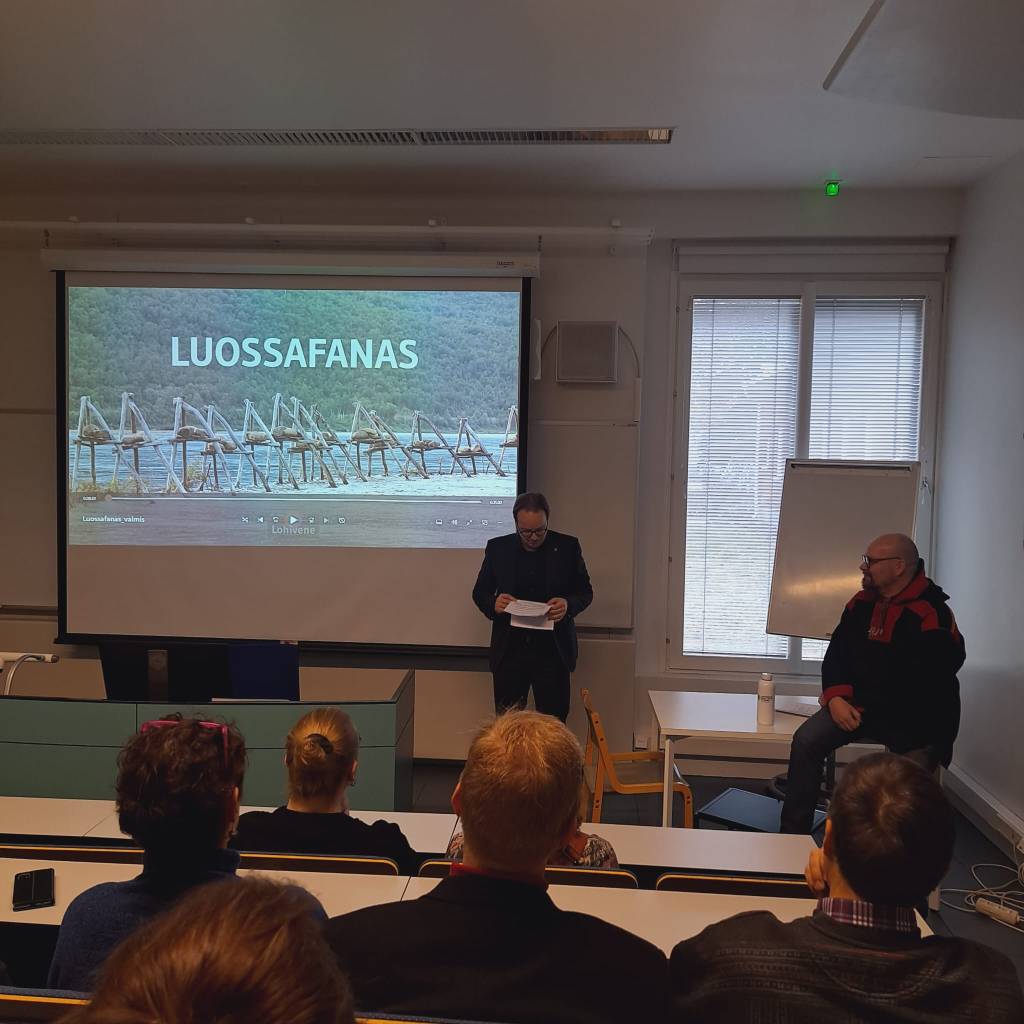
Syväjärvi emphasized that in Sámi culture, objects such as duodji (handicrafts) and everyday tools hold profound meaning beyond their practical functions. These items carry stories, significance, and the knowledge of generations, Thus, they act as vessels of cultural heritage, linking the past, present and future. He honored Laiti’s exceptional craftsmanship, noting how the luossafanas represents Sámi identity, community, culture and the inherent relationship with nature. He also underscored the seminar’s importance to the University of Lapland, expressing gratitude for the trust places in the institution to safeguard such a culturally significant artifact as part of its art collection.
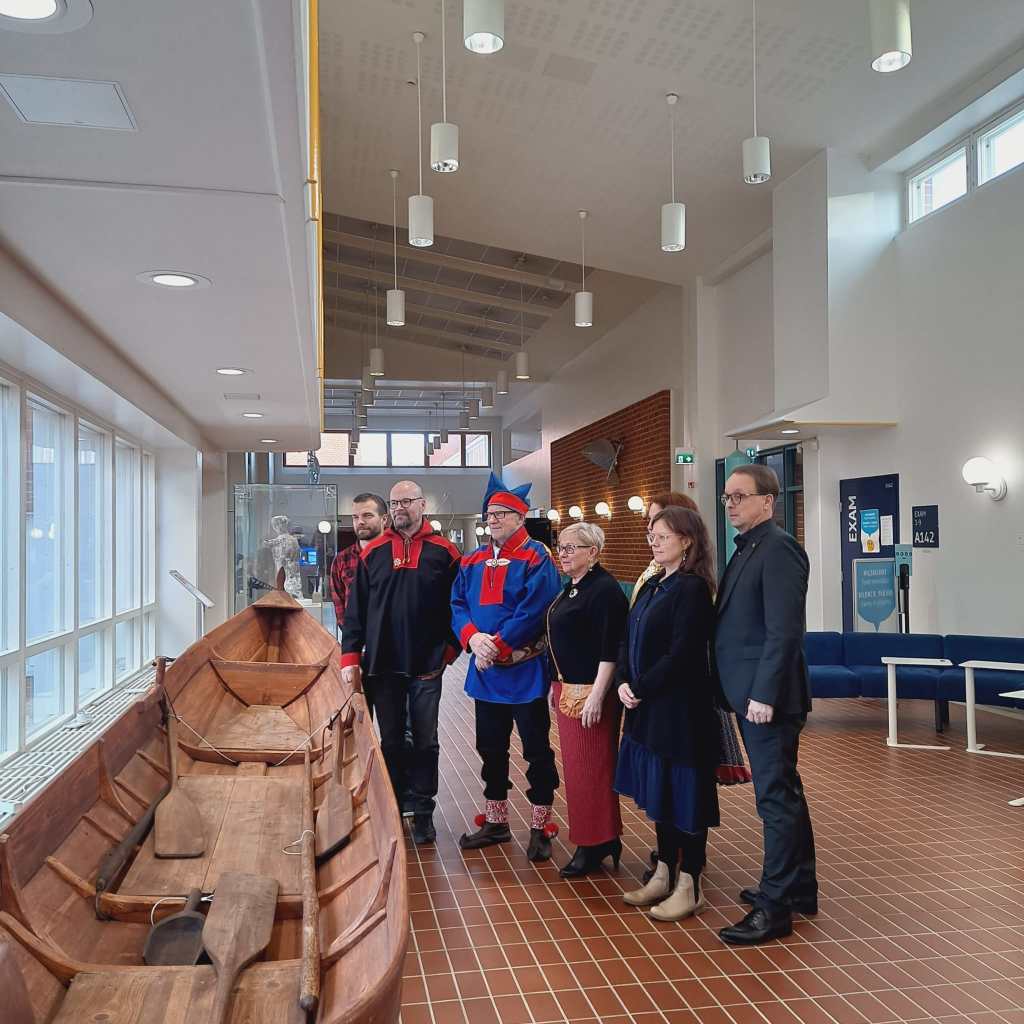
Olu giitu Professor Jarno Valkonen, post-doctoral researchers Áile Aikio, Mikko Äijälä and Rector Antti Syväjärvi for making the seminar such a memorable event!
The creation of the luossafanas in a collaborative achievement of the projects “DEATNU – Bringing institutional virtues into governance: Integrating the scientific, indigenous and local knowing in Teno river salmon policy and administration” and “MÁHTUT – Sámi Knowledge and Practices in the Era of the Green Transition” projects. DEATNU is funded by The Research Council of Finland (346981).
MÁHTUT Research Assistant
Eleonora Alariesto
Speeches, articles and the release statement:
Jarno Valkonen’s Speech (Finnish)
Áile Aikio’s Speech (North Sámi / Finnish)
University of Lapland’s Release Statement of the Luossafanas


Leave a comment