

At the end of May MÁHTUT organized two workshops in Inari in collaboration with the Ministry of Environment. The first workshop took place on 19th of May centered around the theme of repatriation of Sámi cultural heritage and traditional knowledge. The workshop consisted of docent Leena Hansen’s presentation on her research report International Legal Framework for Safeguarding Sámi Cultural Heritage: Toward a Holistic Intergenerational Indigenous Rights-based Approach (2026) and presentations from specialists working with the themes of Indigenous and Sámi cultural heritage and repatriation. In addition to Hansen’s presentation of the report, the Senior Ministerial Adviser of the Ministry of Environment Lotta Manninen presented the ministry’s The Rutzolijirisaxik Voluntary Guidelines for the Repatriation of Traditional Knowledge, that served as the basis for discussions concerning the themes of the workshop. The day included welcoming words by Lotta Manninen and MÁHTUT Principal Investigator Sanna Valkonen and was followed by presentations and commentaries by experts in the field of cultural repatriation. The day concluded in a hybrid roundtable discussion and commentary speeches.
The second workshop was organized by MÁHTUT, Ministry of Environment and Luontoa Oy consulting firm on 20th and 21st of May and focused on the assessment of cumulative impacts on Sámi culture and consultation obligations. Forty participants from various stakeholder groups, organizations and municipalities participated in the workshop to hear expert presentations and take part in interactive workshop sessions. The objectives of the workshop were to increase understanding of legislative obligations concerning Sámi rights and how these rights should be taken into account, to provide information on practices, methods and examples of cumulative impact assessment, to promote peer learning through the sharing of experiences and good practices, to create networks and support future collaboration and to support public authorities in implementing their obligations and improving the realization of the Sámi people’s legal rights.
In this blog post we summarize the key learnings and perspectives throughout the two workshops, which were essential in building knowledge and understanding on several topics concerning Sámi legal rights and the cultural repatriation, preservation and revitalization of intergenerational Sámi cultures.
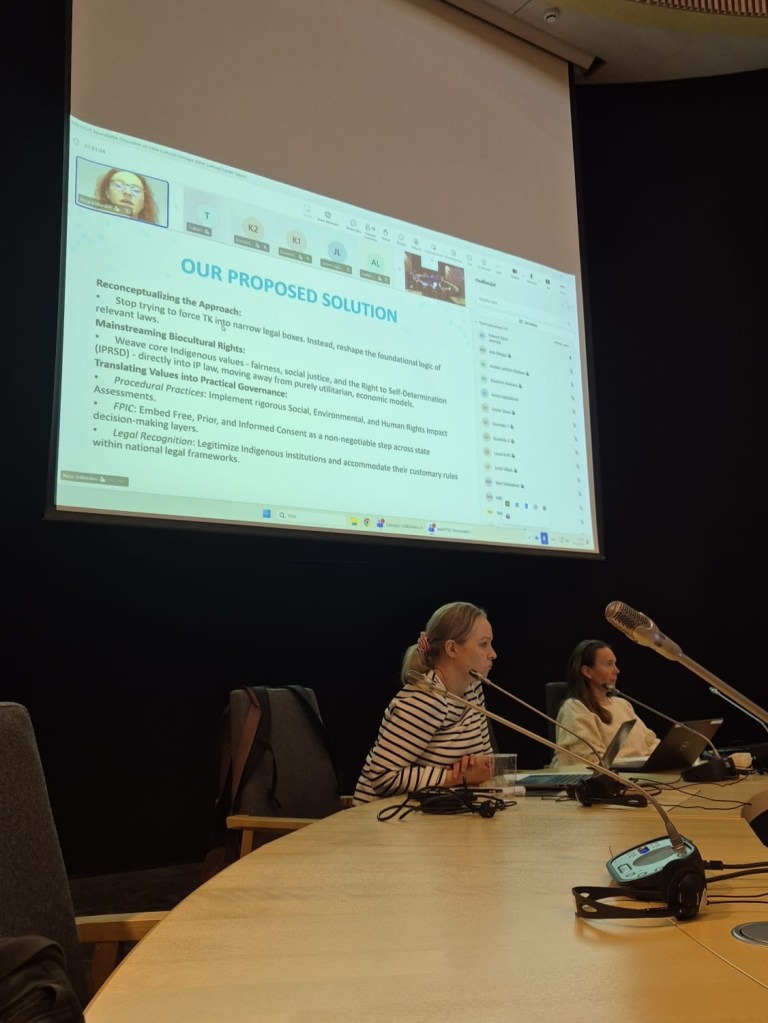
Roundtable discussion on Sámi cultural heritage, with the main theme of repatriation / rematriation of Sámi árbediehtu
The aim of the report concluded by Leena Hansen is to outline the multifaceted international legal framework for the protection of Sámi people’s cultural heritage. The report, elaborating four fields of law: human rights, biodiversity protection, cultural heritage framework and the intellectual property rights, with the problems as well as good practice examples of Finland, Norway and Sweden, argues for a holistic intergenerational Indigenous rights-based approach that places Indigenous rights to the fore of international cultural heritage discourse, as Indigenous cultural heritage cannot be viewed in isolation, as heritage establishes an integral whole. The distinction between tangible and intangible heritage is artificial, as the dimensions are intertwined in Sámi traditional culture.
One of the main questions of the workshop was how to better the processes of repatriating traditional knowledge. The workshop participants offered their insights on the themes, and the shared consensus was the need of resources to Sámi cultural heritage institutions. A shared perspective was also how colonial institutions lack knowledge on how to collaborate and who to contact in questions of Sámi cultural heritage. It was also acknowledged how Sámi cultural heritage institutions have vital roles in negotiating and discussing collaboration and how to work together. These was also shared concern on how to attain more people in work with cultural heritage and how to attract young people to join in.
The mental pressures of repatriation work were also brought into the discussion, as working with Sámi ways is not easy in the old European institutions and the work can be both slow and difficult. It was also acknowledged that there is a repatriation boom going on in Europe and how the age of repatriation has arrived, which can simultaneously be a dream come true, but also stressful as everyone wants to take in. The risen popularity of repatriation raises valid questions on how people can be protected in a decent way and take care that the knowledge does indeed return home. The cultural and historical meanings of repatriation processes are also timely and important, as Western institutions start reflecting on their colonial and nationalist histories as the awareness of history in cultural heritage fields increases. The question of the meaning of decolonization in the process is the role of consent – who has the final say so, authority and responsibility to give consent in repatriation processes?
To summarize the results of the workshop, the participants presentations, commentary speeches and open discussion highlighted the following remarks, ideas for concrete steps and the main challenges of cultural heritage repatriation work:
- Funding and Resources – lack of adequate funding for institutional cultural heritage work in Sámi institutions
- Self-determination, Data Sovereignty and Ownership – who owns and can use the materials of Sámi cultural heritage in Sámi traditional knowledge depositaries?
- Revitalization and Reconnecting – Duodji workshops and courses as vital spaces to encounter Sámi heritage belongings and developing new objects based on traditional techniques
- Emotional Sensitivity Towards the Work of Repatriation – acknowledging repatriation and rematriation as emotional labor, as pieces of proof of lived lives has been stolen or taken by force
- Indigenizing Institutions and Decolonizing Language and Terminology – using Sámi languages and terminology in repatriation processes, indigenizing institutional work and sensitivity to using the Sámi way in institutional work
The participants were grateful and inspired by the workshop and highlighted how the Rutzoliijrisaxik Guidelines can help in Sámi institutional work in the future with institutions who are eager to collaborate.
The Cumulative Impacts on Sámi Culture and Consultation Obligations
At the beginning of the second workshop, Senior Ministerial Adviser Lotta Manninen from the Ministry of Environment and Chair of the Sámi Parliament Pirita Näkkäläjärvi welcomed the participants in their opening remarks, after which the participants introduced themselves briefly. During the introductions, participants expressed enthusiasm, anticipation, openness and interest. The introductory round was followed by expert presentations, a presentation by Inka Musta, a group discussion and a presentation by Jan Saijets, Project Manager of the Luonnonmetsät Sápmi project, on practical work relating to cumulative impacts using geographic information systems.
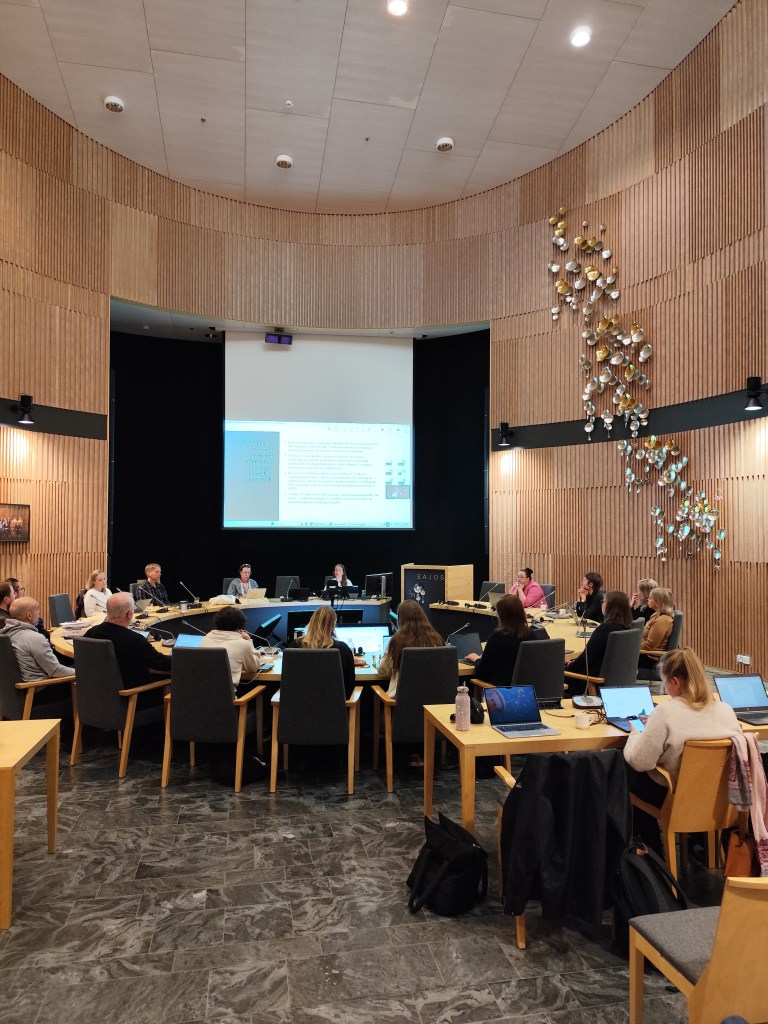
Following the opening remarks, docent Leena Hansen presented the revised provisions of Section 9 of the Sámi Parliament Act, which strengthens authorities’ obligations to cooperate and negotiate with the Sámi Parliament at an early stage of planning and decision-making. The reform aims to enhance Sámi self-determination and ensure meaningful opportunities for the Sámi to influence decisions affecting their culture and livelihoods.
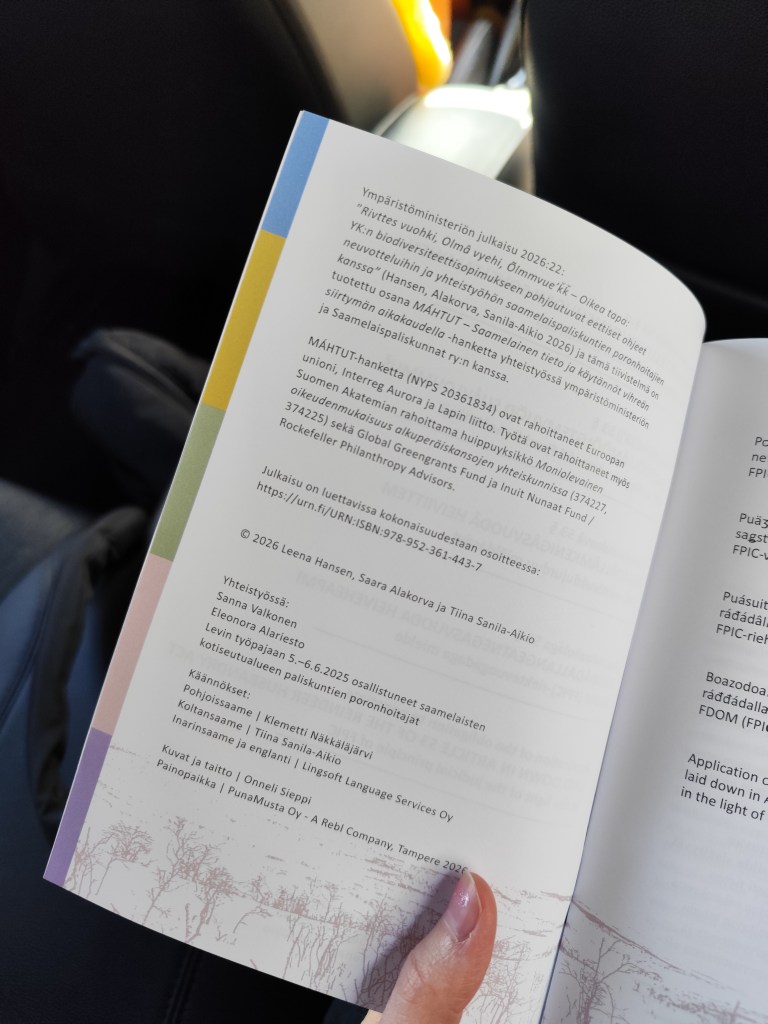
Hansen also highlighted the growing importance of the principle of Free, Prior and Informed Consent (FPIC) in negotiations concerning Sámi rights. Recent decisions by the UN Committee on Economic, Social and Cultural Rights, recognizing the Sámi siida as an FPIC community, mark an important step towards acknowledging Sámi self-governance. To support authorities and practitioners, ethical guidelines for negotiations and cooperation with Sámi reindeer herders have been developed through collaboration between the University of Lapland’s MÁHTUT project, the Ministry of Environment and the Sámi Balgosat rs.
As part of the workshop, Tiina Sanila from the Sámi Balgosat rs, Anne-Maria Magga from the University of Lapland and Sámi cultural expert Aslak Holmberg gave insightful presentations on Sámi reindeer herding and Deatnu fishing. The presentations highlighted the importance of respecting Sámi rights holders and recognizing Sámi communities’ own laws and customary land-use practices. The speakers emphasized that meaningful and timely consultations with affected communities, together with FPIC, are essential when planning activities affecting Sámi areas. Reindeer herding and fishing were presented not merely as livelihoods, but as fundamental pillars of Sámi culture, languages and the transmission of traditional knowledge across generations.
The workshop’s group discussions identified several challenges related to cumulative impact assessment processes. Participants highlighted the need for clearer responsibilities, procedures and guidance, particularly in land-use planning, where assessing cumulative impacts and identifying the appropriate stage for assessment can be difficult. Limited resources, insufficient number of experts and challenges in accessing relevant information were also recognized as key challenges.
Discussions further emphasized the importance of strengthening collaboration, information sharing and participation among authorities, Sámi communities and other stakeholders. Participants stressed the need for continued joint learning and the development of practical approaches for implementing new legislative obligations. In addition to identifying adverse impacts, participants underlined the importance of recognizing and assessing potential positive cumulative impacts.
The workshop concluded in good spirit, shared learning and optimism for the future. Participants expressed willingness to continue the dialogue on developing cumulative impact assessment practices.
The University of Lapland and the MÁHTUT project warmly thank all participants for the inspiring workshops. Olu giitu, takkâ ennuv, späʹsseb!
Eleonora Alariesto
Project Planner


Leave a Reply